Our Story
What began as a local response to educational need has grown into a shared mission shaped by students, educators, families, communities, and partners. Explore the milestones that have shaped Olancho Aid and continue guiding where we are going next.
Olancho Aid is a faith-inspired educational nonprofit working in Olancho, Honduras.
Since the early 1990s, our work has grown from a local response to educational exclusion into a connected mission advancing inclusive education, student opportunity, professional collaboration, intercultural exchange, and long-term partnerships.
Today, Nazareth School, Cardenal Institute, and Global Exchange bring that mission to life by helping students learn, participate, develop their potential, and contribute to their communities.
Early 1990s
Recognizing a need that could no longer be ignored
Our story began with a reality facing many families in the region: children with disabilities had very limited access to education, specialized support, and opportunities to participate in community life.
At the time, stigma and a lack of information led some families to keep their children at home, often because they did not know where to find guidance or how to support their needs. What began as a response to exclusion gradually became a broader movement for education, dignity, and belonging and community advocacy.
This reality inspired the creation of a school where children and young people with disabilities could be welcomed, educated, and recognized for their abilities and potential.
1996
Nazareth School opens
 Nazareth School opened with eight students and a commitment to inclusive education.
The school created a place where children and young people with disabilities could learn, communicate, participate, and build relationships. As families gained support and the community became more informed, Nazareth also helped challenge the belief that children with disabilities should remain excluded from education and public life.
Over time, that commitment to inclusion would grow to include more individualized learning, therapy services, parental support, community advocacy, and vocational education designed around each student’s needs and potential.
2000
Santa Clara begins as an educational response for families
Around 2000, the idea for Santa Clara Bilingual School began as a childcare program for mothers studying at the Catholic University campus in Juticalpa.
As the need for bilingual education grew, the initiative developed into a formal elementary school. Its primary school building was completed in 2003.
2002
Cardenal Institute opens with 53 students
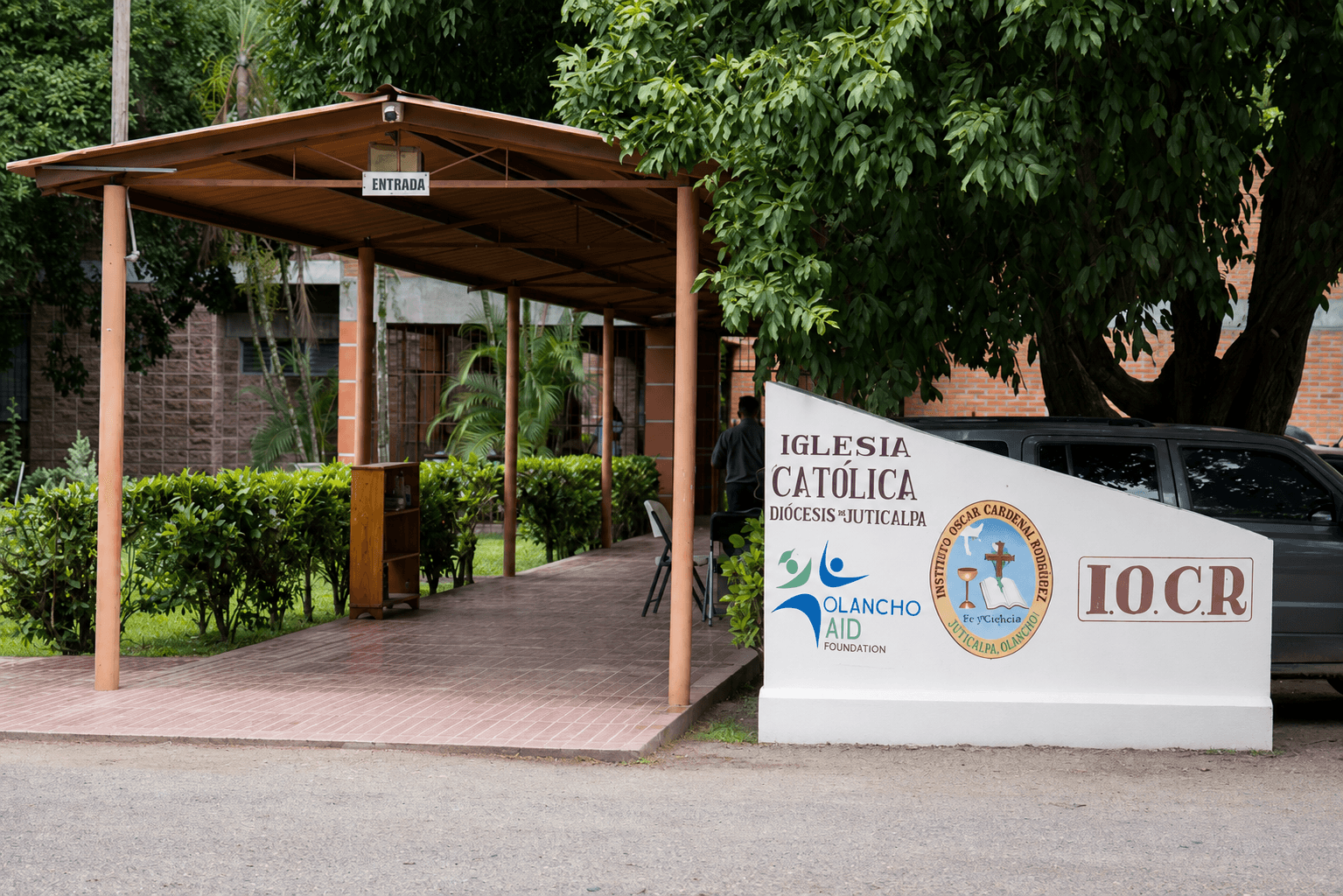 Cardenal Institute opened in 2002 to provide secondary education for students from rural and urban communities across Olancho.
From the beginning, the school’s purpose has centered on helping young people strengthen their academic foundations, overcome learning gaps, and prepare for university and future opportunities.
By welcoming students with different academic backgrounds and providing close academic support, Cardenal helps build the essential skills students need to continue learning, pursue higher education, and participate meaningfully in their communities.
2008
Olancho Aid Foundation becomes a U.S. nonprofit
Olancho Aid Foundation, Inc. received nonprofit status in the United States and established a Board of Directors.
This milestone created a stronger institutional structure for governance, fundraising, partnerships, and long-term support for educational programs in Honduras.
2010
Santa Clara expands into secondary education
The Santa Clara secondary school campus was built in 2010, allowing the bilingual program to serve students from early childhood through high school.
Santa Clara later grew to approximately 800 students and became an important part of Olancho Aid’s educational and institutional history.
2012
Partnerships and community initiatives expand
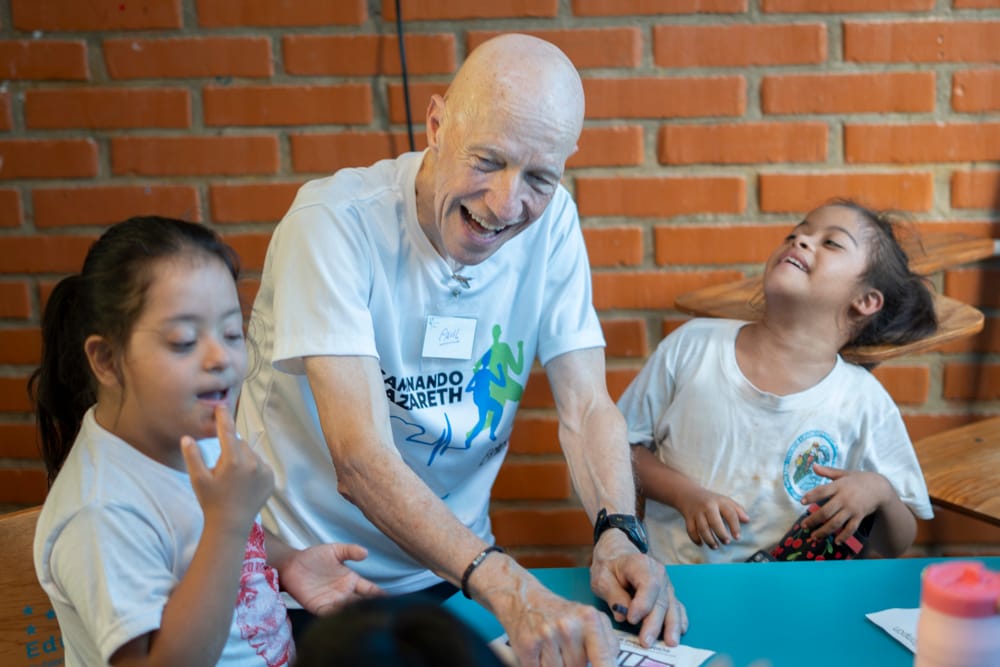 Parishes, schools, universities, visiting partners, educators, professionals, and donors became increasingly involved in Olancho Aid’s work.
During this period, the organization hosted approximately 12 visiting groups each year, bringing between 175 and 225 participants to Olancho. These relationships supported education, scholarships, cultural exchange, and community initiatives.
Olancho Aid also installed 27 water systems in rural communities and explored vocational and social-enterprise initiatives, including the Agape Farm hydroponic project.
These experiences strengthened the organization’s understanding of sustainability, local consultation, professional expertise, cultural humility, and the importance of building programs around community priorities and long-term impact.
2020
A major institutional transition
The COVID-19 pandemic interrupted international travel, affected school operations, and created significant financial and organizational challenges.
During this period, the management of Santa Clara Bilingual School transitioned to the Diocese of Juticalpa. Olancho Aid then began restructuring and refocusing its resources around Nazareth School, Cardenal Institute, and its core educational mission.
2021
From short-term service to Global Exchange
Olancho Aid began transforming its former short-term service model into Global Exchange.
Through this model, participants experience Honduran culture, listen to students, families, educators, and professionals, and collaborate on educational priorities identified locally.
Universities, parish partners, professionals, researchers, individuals, and organizations connect with Olancho through cultural immersion, intercultural exchange, mutual learning, professional collaboration, and long-term partnership.
Global Exchange reflects a relationship based on solidarity and encounter: visiting partners come not as saviors, but as learners and supporters who become part of an ongoing educational community.
2022
Nazareth Purified Water begins a new vocational stage
Originally created as a small, artisanal operation supplying purified water to Olancho Aid’s educational centers, the project entered a new stage in 2022 when Nazareth students began participating.
Today, Nazareth Purified Water is developing as a vocational project and microenterprise where students can strengthen practical skills, responsibility, confidence, and workplace habits.
Olancho Aid continues working toward a more structured and self-sustaining model that supports student learning and the project’s long-term growth.
2026
One connected mission moves forward
Olancho Aid is entering its next chapter with a clearer institutional identity and a unified vision for Nazareth School, Cardenal Institute, and Global Exchange.
The organization is strengthening educational quality, inclusive learning, therapies, communication support, vocational preparation, university pathways, community partnerships, and long-term organizational sustainability.
As part of this next chapter, Nazareth School opened a new Psychology Department to provide students with more comprehensive support, closer follow-up, and therapeutic care adapted to their individual needs.
The department will also strengthen collaboration among families, educators, and professionals, creating more consistent support across school and home.
The goal is not only to sustain two schools, but to build educational institutions that help students grow academically, professionally, personally, and spiritually—while strengthening the communities they call home.
The story continues
Each chapter of Olancho Aid’s history has helped shape the organization we are becoming: more focused, more collaborative, more locally grounded, and more committed to education as a pathway to dignity and opportunity.
That commitment remains deeply relevant today. Across Honduras, access to high-quality education is still uneven, particularly for students in rural and underserved communities. For students with disabilities, those challenges are compounded by the continued exclusion they can face within the public school system and by the extremely limited availability of special education services, despite changes in laws and policy.
Through Nazareth School, Cardenal Institute, and Global Exchange, Olancho Aid continues to respond to these realities by expanding access to inclusive, high-quality learning, strengthening educational opportunity, and building partnerships that support students, educators, families, and communities.
Today, that story continues through every student, family, educator, parish, university, donor, professional, and partner who walks alongside this mission.
Help write the next chapter.