Education in Honduras:
Understanding the Challenges in Olancho
Education in Honduras is shaped by more than whether a student has a school to attend. Staying in school, learning at the expected level, having adequate school conditions, and reaching higher education are all different parts of the journey. These challenges can be especially important in Olancho, Honduras’ largest department, where communities are spread across a wide geographic area and nearly 69% of the population lives in rural areas, according to Honduras’ National Institute of Statistics in 2023.
Understanding this context helps explain both the challenges students face and the educational pathways Olancho Aid is working to strengthen. 
Access to education changes as students get older
At the national level, UNICEF reported in 2024 that about 28% of Honduran children and adolescents ages 3 to 17 were outside the education system.
In Olancho, the difference between the early and later stages of education is particularly noticeable. According to 2023 Ministry of Education data, the gross enrollment rate for grades 1 through 6 in Olancho was about 91%. By the final years of secondary school, enrollment was only about 24%, showing that participation becomes much lower as students move toward the final years of secondary education.
Why do teenagers leave school?
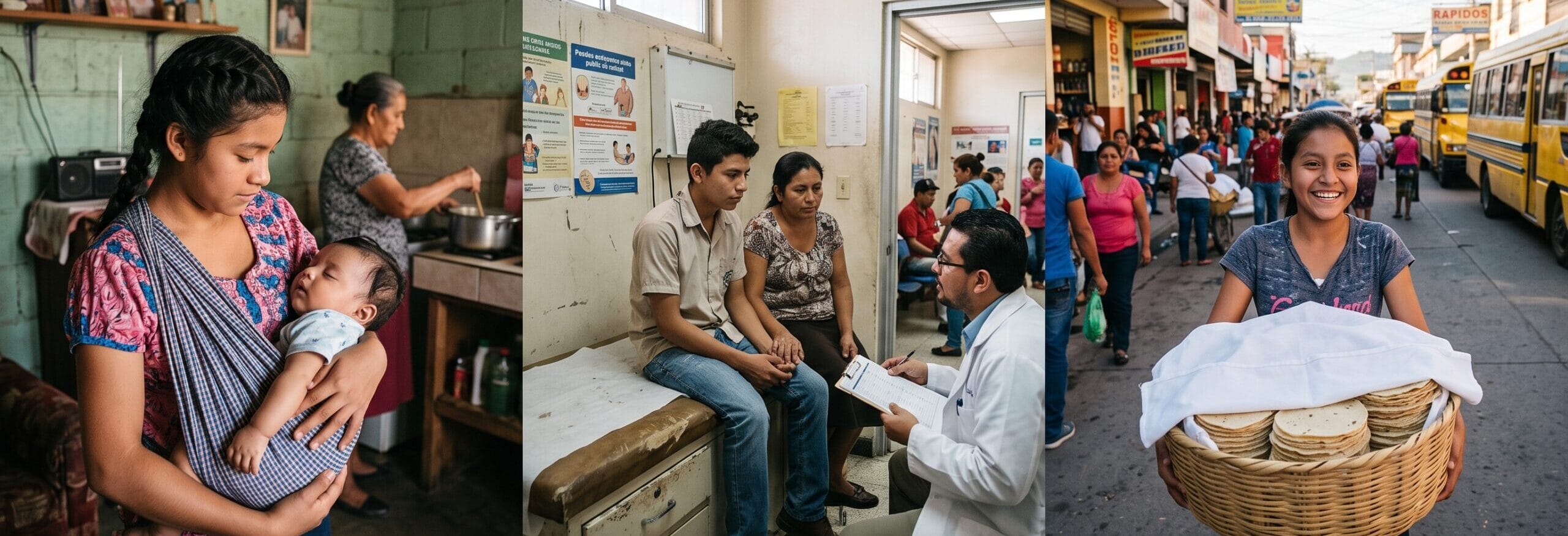
There is no single reason. A 2025 UNICEF and CEPAL analysis looked at Honduran adolescents ages 15 to 17 who were no longer studying. The reasons they reported included:
- 42.6%: lack of financial resources
- 41.3%: did not want to continue studying
- 4.2%: marriage or pregnancy
- 3.5%: family or health problems
- 2.7%: work
The same study found that 51.7% of 15- to 17-year-olds who were already out of school were participating in the labor market, and their earnings could represent an important part of household income. Those two work-related percentages measure different things: Only 2.7% identified work as the original reason they stopped studying, while 51.7% were working after they were already out of school.
This helps show why school continuation can be complex. Family finances, students’ expectations about the value of education, health, family responsibilities, and employment can all become part of the decision.
School conditions are also part of the educational experience
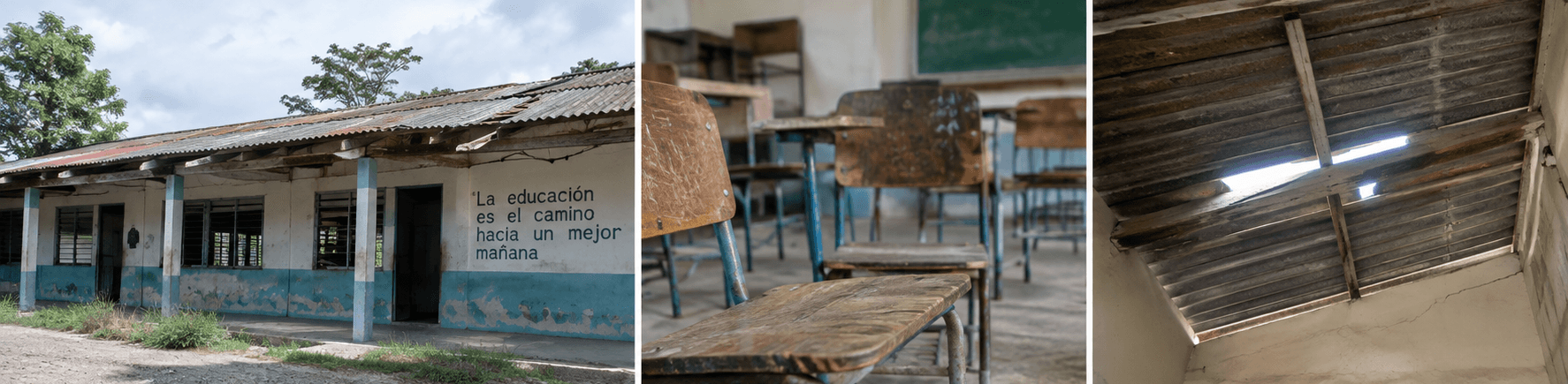
Access to education also depends on what students find when they arrive at school. A 2022 FONAC review of school infrastructure, published in 2024, found significant challenges across Honduras: about 60% of schools needed improvements to their roofs, 70% needed repairs to doors and windows, 53% lacked handwashing facilities, and 60% did not have enough chairs for students.
Olancho has faced some of these challenges directly. According to 2024 Ministry of Education data reported by La Prensa, about 21% of the schools included in the Olancho data lacked potable water, while roughly 55% lacked electricity.
These figures do not describe every classroom in Olancho, but they help illustrate why educational opportunity is also connected to infrastructure, geography, and the resources available to schools.
Being in school does not always mean learning at the expected level
Enrollment is only one measure of education. UNESCO’s 2019 ERCE assessment evaluated the reading and mathematics skills students are expected to develop by sixth grade. In Honduras, 16.2% reached the minimum proficiency level in reading and 11.2% in mathematics. So a student can be enrolled, attend classes, and continue advancing through grades while still needing additional support in reading, mathematics, or other foundational skills.

Higher education brings another geographic challenge
For students who finish secondary school, university becomes another stage of the journey. A 2025 study using 2024 higher-education records found that university enrollment in Honduras remains highly concentrated geographically. Francisco Morazán and Cortés together represented 72% of national university enrollment, while Olancho accounted for only roughly 4–5%.
This does not mean that only 4% of people from Olancho attend university. It means that only a small share of Honduras’ total university enrollment is located within Olancho. In a department as geographically large and dispersed as Olancho, where higher-education programs are available can matter greatly for students deciding what comes next.
Inclusion is another part of educational access
Not every student needs the same educational pathway. UNICEF’s 2024 regional data estimate that about 14% of Honduran children ages 2 to 17 have one or more functional difficulties, which can include areas such as learning, communication, mobility, hearing, vision, or other forms of functioning. For these students, access to education is not simply about having a classroom available. It can also mean having inclusive teaching, communication support, therapy, individualized learning approaches, life skills, and pathways that recognize different abilities and goals.

How Olancho Aid fits into this context
Olancho Aid does not approach these realities as if every student needs the same solution.
Our educational work takes place through Cardenal Institute and Nazareth School, two connected schools serving different learning needs and educational pathways.
At Cardenal Institute, the focus is on strengthening academic foundations, overcoming learning gaps, and preparing students for university and future opportunities. The school is taught primarily in Spanish, while English classes help students build additional language skills. Through Global Exchange, students also have opportunities for intercultural exchange with visiting university, school, parish, and professional groups; giving them meaningful chances to practice English, learn about other cultures, and build relationships beyond their immediate community.
At Nazareth School, the focus is on Inclusive Education that responds to each student’s abilities, learning needs, and potential. This includes Therapy Services, communication and developmental support, Parental Support, Community Advocacy, and Vocational Education that can help students strengthen independence and prepare for meaningful participation in adult life. Nazareth students and staff also take part in Global Exchange, where visiting educational and professional partners contribute to mutual learning, training, cultural exchange, and long-term collaboration.
The goal is not for every student’s journey to look the same. For one student, success may mean preparing for university. For another, it may mean developing stronger communication skills, greater independence, vocational preparation, or another meaningful path forward.
Understanding the context behind the numbers
Education is not only about entering school. It is about being able to stay, having the opportunity to learn, studying in an environment that supports learning, and having meaningful options for what comes next.
The statistics help us understand some of the challenges facing education in Honduras and Olancho. But they also help explain why strengthening educational pathways matters, and why different students may need different kinds of support to reach their potential.
Ver esta publicación en Instagram