Honduras’ Patriotic Month: The History, Symbols, and Traditions Behind September
Every September, Honduras changes. Blue and white flags appear in schools, homes, streets, and public spaces. Students spend weeks preparing for civic parades. Marching bands rehearse, palillonas practice their routines, and communities gather to celebrate. But Honduras’ Patriotic Month, known as “Mes de la Patria”, is about more than September 15. It brings together centuries of history, national symbols, Central American connections, and traditions that continue to be passed from one generation to the next.
Here is some of the history behind what Hondurans celebrate throughout September:
Honduras before it was Honduras
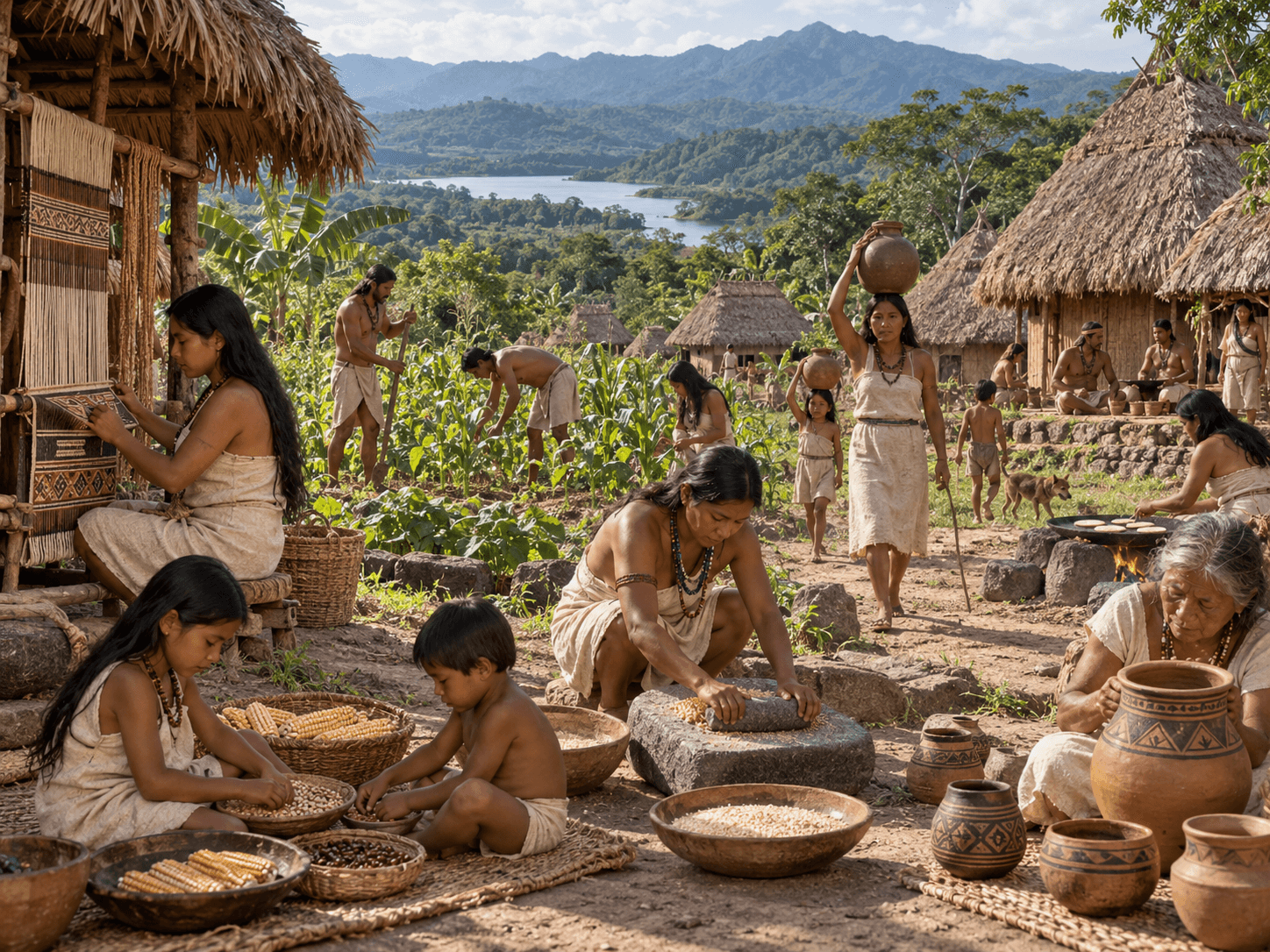
Recreation of Indigenous peoples in Honduras
The story of Honduras did not begin with independence. Long before Honduras became a nation, this territory was home to Indigenous peoples with their own languages, social structures, traditions, and ways of life. These included peoples such as the Lenca, Maya Ch’ortí, Pech, Tolupan, and others whose communities and cultures continue to form part of Honduras today. Honduras’ Ministry of Education recognizes the country as multicultural and multilingual, with Indigenous and Afro-Honduran peoples continuing to contribute to its national identity.
The arrival and conquest of the Spanish during the 1500s dramatically changed Indigenous life. Communities faced military conquest, forced labor, displacement, and new political, economic, and religious systems as the region became part of the Spanish colonial world. Spanish colonial rule would shape the territory for centuries.
Why Honduras celebrates September 15

Recreation of José Cecilio del Valle drafting independence act in 1821
On September 15, 1821, representatives in Guatemala signed the Act of Independence of Central America, separating the region from Spanish rule. The territory that would become Honduras was part of that political process alongside Guatemala, El Salvador, Nicaragua, and Costa Rica. Still, September 15 became the date Honduras commemorates its independence from Spain, which is why it remains at the center of the country’s patriotic celebrations.
Why the whole month of September matters
In Honduras, patriotic celebrations extend well beyond one day. September begins with National Flag Day on September 1, when schools, public institutions, and communities honor one of the country’s most important national symbols. Throughout the month, schools hold civic activities and parades. September 15 includes the raising of the national flag, the reading of the Act of Independence, and large student parades across the country. Later in the month, Honduras also commemorates the arrival of the Independence Documents, or “Pliegos de Independencia” that carried news of the declaration to local authorities.
Together, these traditions make September a month for remembering Honduras’ history and reflecting on national identity.
What does the Honduran flag mean?
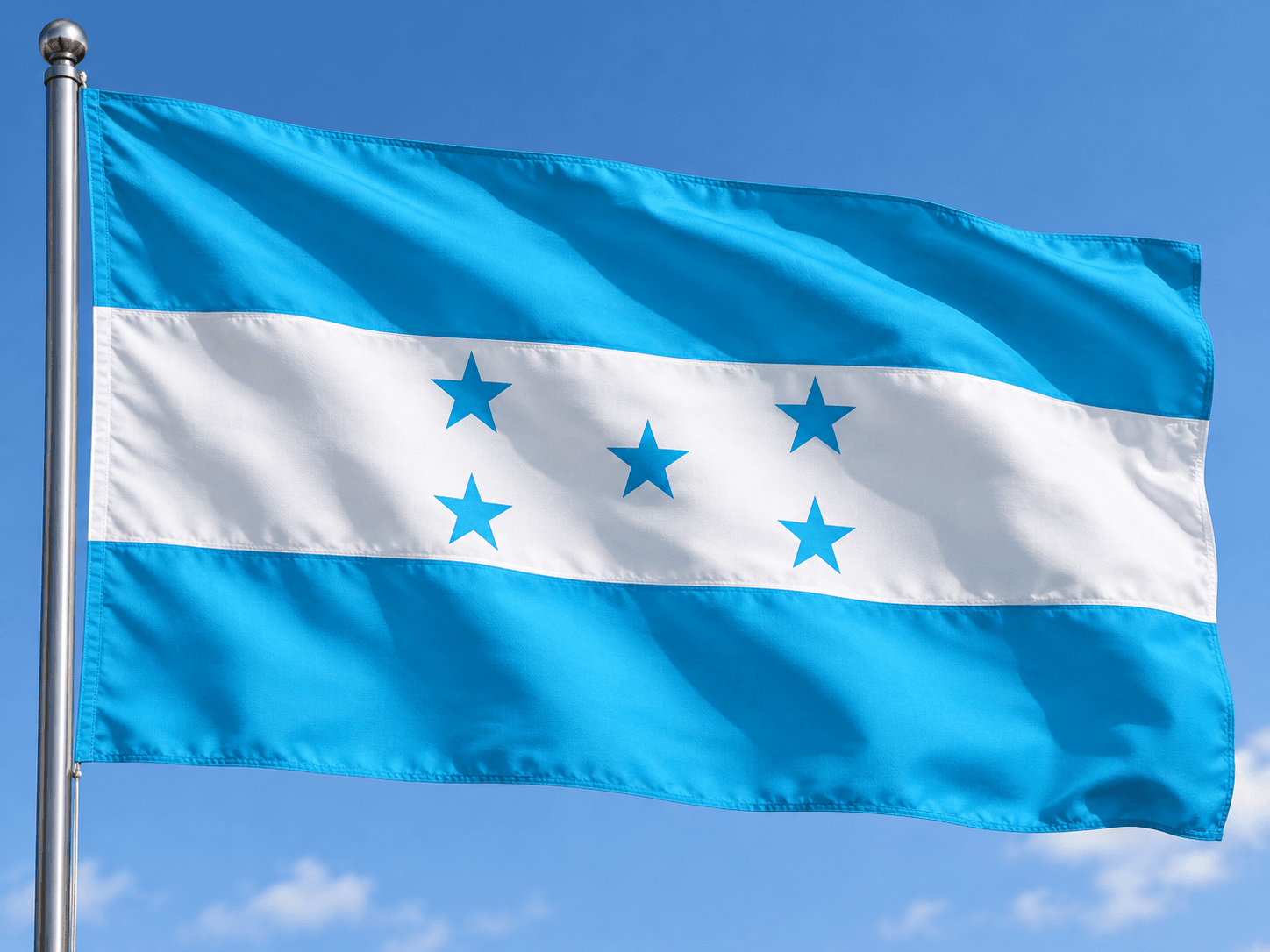
Honduras Flag
The Honduran flag was officially established in 1866. Its design includes three horizontal stripes: two blue and one white, with five blue stars in the center. The blue stripes represent Honduras’ sky and the Atlantic and Pacific oceans, while the white stripe represents ideals such as peace, purity, faith, and integrity.
The five stars carry an especially important historical meaning. They represent the five Central American countries that formed part of the former Central American Federation and preserve the ideal of regional unity: Honduras, Guatemala, El Salvador, Nicaragua, and Costa Rica. That is why the flag is not only a symbol of Honduras itself. It also carries a reminder of the country’s shared Central American history.
What are you seeing in a Honduran Independence Day parade?

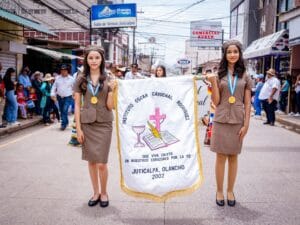
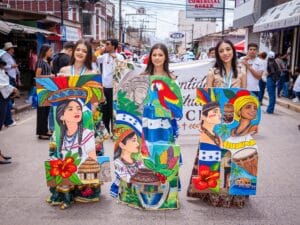

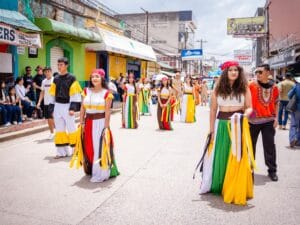
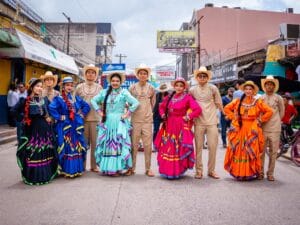
For many Hondurans, one of the most recognizable parts of “Mes de la Patria” is the student parade. Schools prepare for weeks, and different groups within each institution contribute to the procession. Honduras’ Ministry of Education has documented parades featuring marching bands, palillonas, pomponeras, honor guards, cadets, student formations, and cultural or allegorical groups.
If you are unfamiliar with these traditions, here is what some of those groups represent:
The marching band
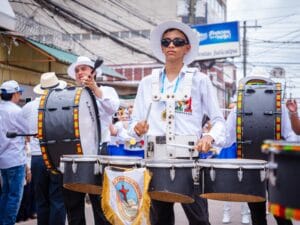
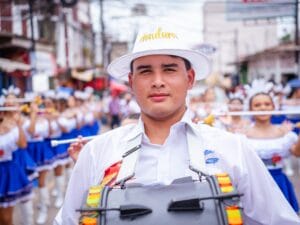
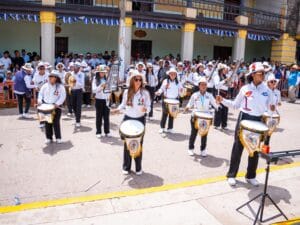
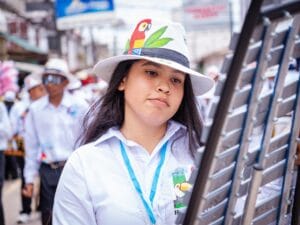
School bands provide much of the sound and rhythm of the parade. Students perform on drums, percussion, brass, and other instruments while marching together through the streets. Preparing a school band can require weeks of rehearsal, coordination, discipline, and teamwork. Honduras’ Ministry of Education regularly identifies bands as one of the central student groups in civic parades.
The palillonas
Palillonas, sometimes called bastoneras, are one of the most recognizable figures in Honduran school parades. They perform coordinated routines alongside the school band, often using batons and choreographed movements. Their uniforms and routines can vary from school to school, and their performances have become an established part of Honduras’ September celebrations. National education authorities have even organized competitions specifically for primary- and secondary-school palillonas.
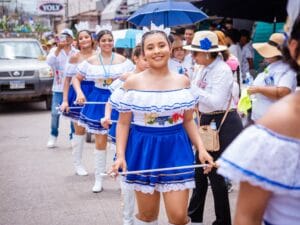
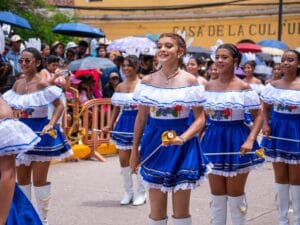
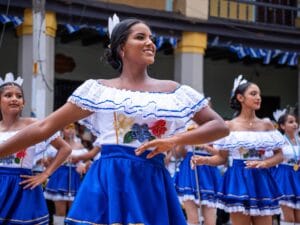
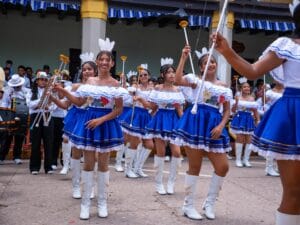
Honor guards, pomponeras, and other student groups
Parades may also include a ” cuadro de honor. ” or honor group, pomponeras, cadets, uniformed student formations, folkloric presentations, and groups representing historical or cultural themes. The exact structure varies by school, which is part of what makes each parade distinctive.

More than a parade
For students, these traditions involve much more than walking through the streets on September 15. They spend weeks rehearsing music, routines, marching formations, and cultural presentations. Families, teachers, and communities often participate in the preparation as well.
That is why the parades remain such a visible part of Honduras’ patriotic month. They connect history with the present. The flags remember a nation and its Central American roots. The music fills the streets. Traditional clothing and cultural presentations reflect different parts of Honduran identity. And each new generation of students learns the traditions that came before them.
At Cardenal Institute and Nazareth School, our students participate in that same cultural context. Through school activities and civic traditions, they have opportunities to experience Honduran history not only as something found in a textbook, but as something that continues to be remembered and shared within their communities.



Bringing You Closer to Honduras
Understanding Honduras means understanding more than one date. “Mes de la Patria” brings together Indigenous history, the colonial period, independence, national symbols, Central American connections, and traditions that Hondurans continue to celebrate today. The next time you see a Honduran student marching behind a blue-and-white flag, hear a school band, or watch a palillona perform, you are seeing more than a parade. You are seeing one way a country passes its history and identity from one generation to the next.
This article is part of Bringing You Closer to Honduras, Olancho Aid’s series exploring the history, culture, people, and context behind the place we call home.